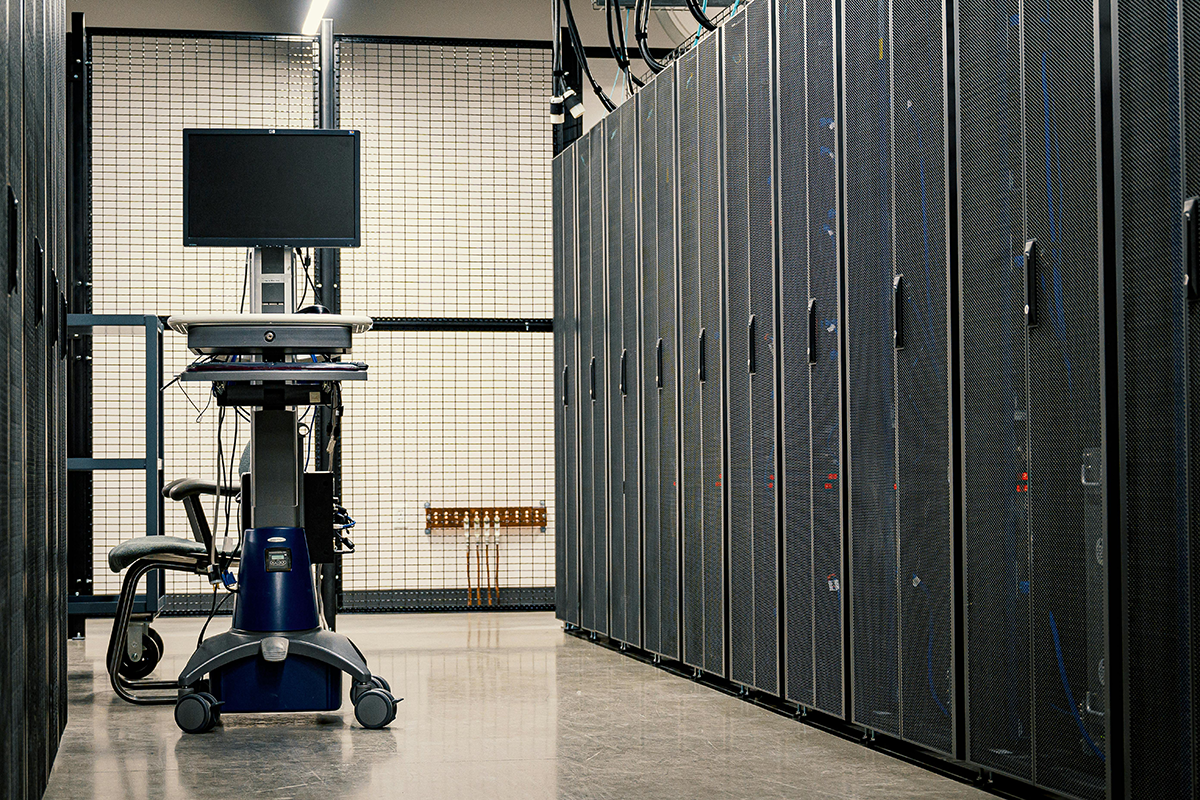



Organized server room setup for CPA firm IT infrastructure

Los Angeles Cloud Security

A 2026 Cybersecurity Playbook for Business Leaders

Los Angeles businesses are reshaping cloud security for 2026, moving from technical checklists to board-level business decisions. Los Angeles Cloud Security is no longer solely the concern of security specialists; it now sits squarely in the hands of those responsible for revenue, customer trust, and brand reputation.

The most effective leaders treat cybersecurity as a portfolio of risk trade-offs, not a quest for perfect protection. Outcome-driven metrics, shared governance between technology and security leadership, and clear Protection Level Agreements (PLAs) help translate technical risk into financial and operational impact. As breach costs and regulatory expectations rise, decision-makers in Los Angeles must be able to explain, defend, and continuously refine security investments using data, not assumptions.

Key Takeaways for Los Angeles Decision-Makers

  • Cybersecurity must be framed as a business decision, not a purely technical function, with clear accountability and decision rights.

  • Outcome-driven metrics (such as containment time and patch cadence) make cyber performance understandable to boards and non-technical stakeholders.

  • Protection Level Agreements (PLAs) help align budget, risk appetite, and expected levels of cloud and infrastructure protection.

  • The global average cost of a data breach reached about USD 4.88 million in 2024, with even higher averages in the United States, raising the stakes for underinvestment.

  • California’s updated breach notification law requires affected residents to be notified within 30 calendar days starting January 1, 2026, tightening compliance expectations for Los Angeles organizations.

Personalized Experiences Build Loyalty

Quick Definitions

Breach notification clock: The breach notification clock is the time window an organization has to notify affected individuals and, when applicable, regulators after discovering a data breach. In California, updated law now sets a 30-calendar-day requirement for notifying impacted residents in most cases, shrinking the margin for delayed or disorganized responses.
MDR (Managed Detection & Response): Managed Detection and Response combines continuous monitoring, threat detection, and expert-led response into a service that acts as an extension of internal teams. MDR is particularly valuable for Los Angeles businesses that must detect cloud, endpoint, and identity threats quickly but cannot staff a 24/7 security operations function internally.
IR retainer (Incident Response retainer): An Incident Response retainer is a pre-arranged agreement with a specialist provider that guarantees access to digital forensics and response expertise when an incident occurs. An IR retainer reduces legal, regulatory, and operational exposure by shortening decision time during high-pressure events and aligning actions to predefined playbooks and notification timelines.


The Business Risk of Getting This Wrong

Misaligned accountability with security outcomes

When cloud security sits in a technical silo, accountability for risk decisions becomes fragmented. The Gartner 2026 playbook highlights that CIO and CISO objectives often diverge, with many security leaders preferring direct access to boards to escalate risk concerns. Without a shared governance model, Los Angeles businesses risk inconsistent decisions around technical debt, vulnerability remediation, and investment priorities.

Inability to explain cyber spend to the board

Boards increasingly expect cybersecurity performance to be articulated as outcomes, not activity lists. The Gartner framework advocates outcome-driven metrics like incident containment time, OS patching cadence, and third-party assessment coverage to quantify effectiveness. Without these, leaders struggle to justify spend or redirect budgets from low-value controls to high-impact protections.

Escalating breach and downtime costs

Average data breach costs have climbed to around USD 4.88 million globally, with United States incidents even more expensive due to legal exposure, customer churn, and disruption. For Los Angeles organizations operating multi-cloud environments, breaches involving data spread across public cloud, private cloud, and on-premise systems are costlier and take longer to contain, amplifying operational risk.

Regulatory and reputational exposure in California

California’s revised breach notification law requires businesses to notify affected residents within 30 calendar days of discovering a qualifying breach, with separate deadlines for the Attorney General when large numbers are impacted. Failing to meet these timelines not only increases regulatory risk but also erodes customer trust in a market where privacy expectations are high and news travels quickly.

Tackling Efficiency, Security, and Customer Demands Head-On

What “Good” Looks Like Operationally

Accountability: Clear governance and decision rights

  • A modern cybersecurity operating model defines who owns risk decisions, who approves exceptions, and how trade-offs between cost and protection are made.

  • Governance should specify acceptable risk thresholds, roles for internal leaders, and engagement rules for providers delivering managed security services in Los Angeles (including MDR and IR retainers).

Evidence and speed: Outcome-driven metrics

  • “Good” programs replace anecdotal reporting with concise outcome-driven metrics: containment time, patch SLAs, percentage of unassessed third parties, and security awareness outcomes.

  • Leaders should receive short, recurring reports that tie these metrics directly to business services (e.g., customer portals, billing systems) and highlight where PLAs are not being met.

Recovery readiness: Tested continuity and cloud recovery

  • Business continuity planning couples application criticality, data protection needs, and realistic restoration time objectives across cloud and on-premise workloads.

  • Cloud backup and disaster recovery capabilities are tested through regular tabletop exercises and restore tests to confirm that “recover by X” commitments are actually achievable under stress.

Los Angeles Considerations for Cloud Security

Los Angeles organizations often operate across multiple facilities, including offices, warehouses, and production or studio spaces, with high connectivity needs and public-facing digital experiences. This environment increases dependence on resilient cloud platforms, managed security services in Los Angeles, and consistent controls across diverse locations and vendors.

Customer visibility and brand presence are crucial in competitive sectors like entertainment, logistics, healthcare, and professional services. A localized 24/7 network operations capability and a downtown Los Angeles data center presence can strengthen latency-sensitive services, support faster incident triage, and improve continuity planning for regional disruptions.

Vendor ecosystems in Los Angeles frequently span telecom, SaaS, cloud, and specialty providers, making third-party risk management essential. Applying outcome-driven metrics and PLAs to vendors, and aligning them with internal security model assessment findings, helps keep shared responsibility clear and enforceable.


Los Angeles Business Scenarios

Multi-location operations: office, warehouse, remote

A distribution firm with offices in downtown Los Angeles, a warehouse in the Inland Empire, and remote sales teams relies heavily on SaaS platforms and VPN access. Robust MDR coverage, endpoint hardening, and PLAs around identity protection and patching help keep operations running even when a remote endpoint is compromised or a warehouse system goes offline.

Professional services with client compliance expectations

A Los Angeles-based legal or consulting practice may face client-imposed security controls aligned to frameworks like NIST or ISO. Outcome-driven metrics and a clear incident response retainer give clients visibility into how quickly the firm can detect and respond to threats, while documented business continuity planning supports contractual uptime and data protection commitments.

Retail, hospitality, and appointment-based multi-site

A regional chain of salons, restaurants, or clinics operating across Los Angeles depends on point-of-sale, booking, and marketing platforms that live in the cloud. Centralized monitoring, tested cloud backup and disaster recovery, and well-defined breach notification procedures reduce the risk that a localized incident escalates into a citywide brand crisis.

Consultation between CPA and IT advisor reviewing compliance checklist
Personalization Depends on Connected Data

A Practical Decision Framework

A practical decision framework helps Los Angeles leadership translate cloud security choices into repeatable, defensible actions. It should be kept simple enough for non-technical stakeholders to use consistently.

  • Tiering by business impact (Tier 1/2/3)

    • Tier 1: Mission-critical services (revenue-generating apps, core ERP, patient or client systems) requiring strict PLAs, shortest recovery objectives, and enhanced MDR coverage.

    • Tier 2: Important but not business-halting systems (departmental apps, internal collaboration) with moderate recovery and security expectations.

    • Tier 3: Low-impact systems where cost efficiency and basic hygiene dominate, but minimum compliance and monitoring remain in place.

  • Responsibility map (internal / provider / partner)

    • Clarify which controls are owned internally (risk acceptance, policy, approvals), which are delivered via managed security services Los Angeles (MDR, SIEM, IR retainer), and which belong to cloud providers.

    • Document this in a security model assessment so that gaps and overlaps are visible at a glance.

  • Recovery readiness check (backup/restore test plan)

    • For each tier, define backup frequency, retention, and maximum acceptable data loss, then schedule regular restore tests.

    • Include breach tabletop exercises that validate how quickly teams can move from detection to containment, notification, and business recovery.

  • 30/60/90-day prioritized roadmap

    • 30 days: Confirm governance model, assign accountable owners, and baseline outcome-driven metrics and current PLAs.

    • 60 days: Address top exposure items (unassessed third parties, expired policy exceptions, critical patch gaps) and finalize incident response retainer commitments.

    • 90 days: Execute at least one cross-functional tabletop exercise, refine PLAs, and integrate cyber metrics into regular executive reporting.

Explore Reliable Security Options with Global IT Communications ​

Los Angeles decision-makers evaluating cloud security investments benefit from a structured, independent assessment of the current security model. Bringing governance, metrics, and recovery posture into a single view reduces decision friction and improves budget alignment.

Security Model Assessment deliverables

  • Documented security operating model and decision rights

  • Protection Level Agreements by business tier and key services

  • Outcome-driven metric set and reporting templates suitable for boards

  • Gap analysis across identity, cloud, network, and vendor risk

  • Breach tabletop exercise outline and recovery test recommendations

Exploring reliable security options with Global IT Communications, supported by a 24/7 local NOC and downtown Los Angeles data center presence, can help align cloud security strategy with real operational realities. The next step is to schedule a focused discovery or assessment discussion to map these concepts to your specific environment and business priorities.

How Global IT Supports Streamlining Financial Operations

Take Action Today with Global IT

Implementing the right IT solutions creates opportunities for growth, efficiency, and better customer relationships. Start building the systems your financial institution needs with Global IT’s expertise. Visit Global IT’s blog for more insights and strategies to transform your operations.

Schedule A FREE Consultation

Connect with us today! Do you have specific worries about introducing new technology at your facility? Please email us at info@globalit.com with your tips or concerns about technology implementation.